
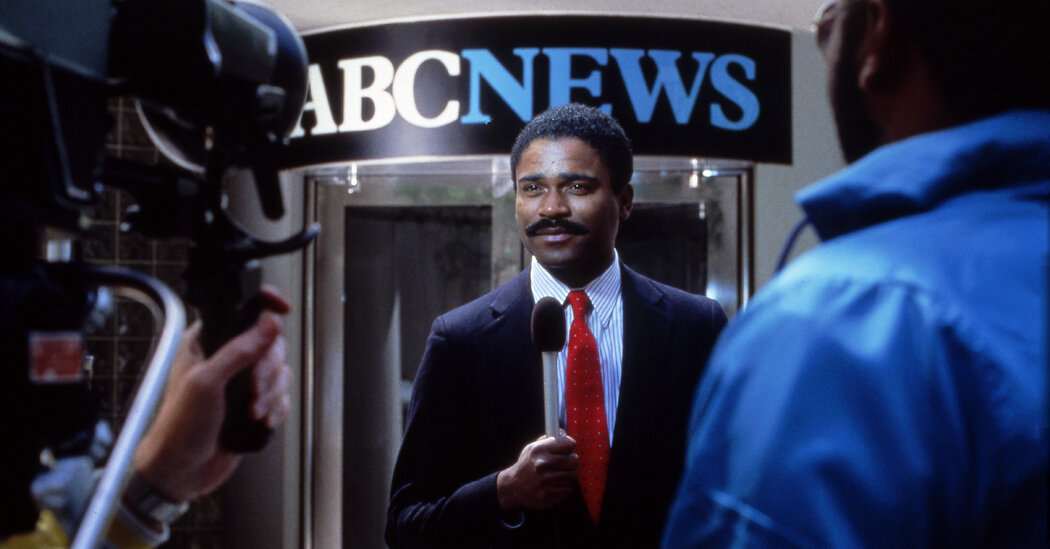

Kenneth Walker, 73, Journalist Who Bared Apartheid’s Brutality
- Africa
- May 8, 2025
Kenneth Walker, a Emmy prize -winning journalist whose reports for the ABC “Nightline” news program helped provide the brutality of the South Africa racist apartheid system to the attention of the American public, promoting it to the Usington agenda. He was 73 years old.
His cousin and executor, Jeff Brown, said his death, in a hospital, was caused by a heart attack, was not widely reported at that time.
The one week’s coverage of Mr. Walker of the brutal policy of the racial segregation of Mr. Walker, produced for “Nightline” with Ted Koppel, the anchor of the programs and a reporters team, won a 1985 Emmy Award from the National Academy of Newsis and Sciences. He was also awarded a gold cane from Alfred I. Dupont-Columbia.
“In the way only television can be revealed ‘Nightline’ for spectators the pain, anguish and anger that resists the struggles of this divided country,” said Dupont-Columbia’s quote. “Matterista executed and exquisite produced, it was perhaps the most powerful television, without a doubt more extraordinary of the year.”
The National Association of Black Journalists appointed Mr. Walker journalist of the year in 1985 for that report. The Association had already awarded an award for his work in printed journalism, for his four -part series about Apartheid for the Washington star, and when he won the Association of the Association for Radio Journalism, he became the first person on Radio and Itsetive Itive.
The association later he, with his prize to Lifetime Achievement by Frederick Douglass.
Door Four-Decade Carrera, Mr. Walker was a reporter of the Washington Star (from 1969 to 1981, when he folded), for “Nightline” (from 1981 to 1988) and for NPR, where he served as head of the Africa Agency from 1999 to 2002.
Mr. Koppel recalled in an interview that Mr. Walker “was one of several African -American employees in the ‘Nightline’ that was gently, and not so gently, promoting more attention to Nelson Mandela when he was still in jail and was millions of people” at that time).
Mr. Walker helped persuade ABC executives to spend $ 1 million to send the “Nightline” production team to South Africa for several weeks, Mr. Pareja said: “His legacy is that it was instrumental to help us convince us to be something we should do. The program changed mind in the United States and southern Africa, and won more than any program.”
But Mr. Walker did not limit his criticisms to other countries. It was also open about racism in the United States and the special responsibility of black journalists.
In 2021, in the annual hero of the Ricanda Table of Richard Prince, the former reporter and editor of the Washington Post writes the online column newspaper, Mr. Walker described the United States as a “scene of the active crime” that justified an investigation of the United Nations on crimes again against humanity because of numerous racist incidents that “the means of communication include the majority of communication. Black journalists are designing. “
Hello, he favored repairs for slavery, and criticized the negative representation of blacks on television and popular music.
Hey, also regretted the shortage of black reporters; He wrote on a 2022 Facebook publication that racist hiring practices “had made it impossible for the media to keep the public.”
Kenneth Reginald Walker was born on August 17, 1951 in Washington. His father, William, was a taxi driver; His mother, Lillie, was a government secretary.
After graduating from Archbishop Carroll high school in 1969, he worked at the Washington star as a copy boy while attending the Catholic University of America in a scholarship. He left school before graduating to support his growing family and became a reporter in the star.
Mr. Walker survives two stepsisters, Tabia Berry and Vikki Walker Park, and three grandchildren. Their marriage to Jacquelyn Demesme and R’esah Moon ended up in divorce. A daughter of her first marriage, Maisha Hunter, died in 2017.
As the star reporter, Mr. Walker covered the White House and the Supreme Court, and also served as a national and foreign correspondent.
While he was still in the star, he began working on television, such as the host of a weekend in the public affairs of the weekends at the ABC affiliate in Baltimore, focusing on issues of particular interest for black viewers. After the star folded in 1981, he was hired in ABC as a general assignment reporter. Then he covered the White House and the Department of Justice of the Network.
When “60 minutes” transmitted a segment in apartheid in December 1984, Mr. Walker produced ABC to cover racial segregation in South Africa. (The “Nightline” team that possible won an Emmy for that coverage included the executive producer, Richard Kaplan; three senior producers, William Moore, Robert Jordan and Betsy West; and two reporters, Mr. Walker and Jeff Greenfield)))))))))))))))))))))
“Blacks in the US. “In addition, the South African black resistance had intensified to the point where it could no longer be ignored.”
Mr. Walker then anchored with lyrics “USA Today: the television series”; Produced “The Jesse Jackson Show”, a syndicated interview program that was issued in 1990 and 1991; and founded Lion House Publishing, whose books included “Black American Testing: Reports from the Front” (1994) by Earl Caldwell, former New York Times reporter.
After leaving NPR, Mr. Walker remained in South Africa, where he served as communications director for the attention of the humanitarian organization.
He returned to Washington in 2015, which needed a kidney transplant. A high school classmate, Charlie Ball, with whom he connected through a group of students, demonstrated a game and donated a kidney.
“Charlie’s gift also has one leg both a gift of spirit and one of life,” Walker said in 2019. “As a member of the latest generation of the civil rights movement, I have spent my life in the first line of the continuous struggle of the United States with its formation and shortage of citizens.
